Central Split HVAC Systems in Lancaster
When Lancaster homeowners search for dependable whole-home cooling and heating, a properly designed central split HVAC system is often the most practical long-term solution. These systems are built to move conditioned air evenly through the entire house, delivering comfort from room to room without the hot spots, cold corners, or noisy limitations of undersized equipment. For homes in and around Lancaster, where summer heat can build quickly and seasonal swings can be dramatic, the right split system has to be more than efficient on paper — it has to be installed, sized, and serviced for real local conditions.
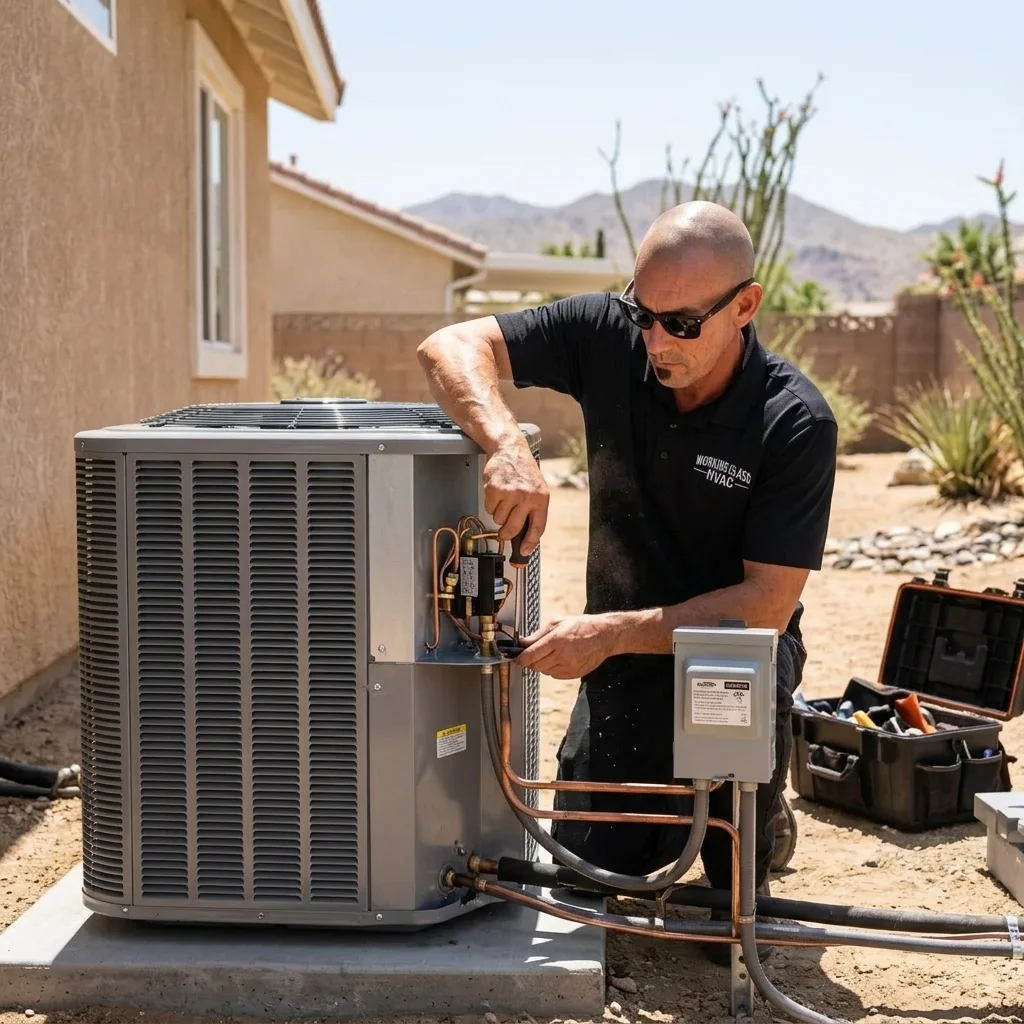
Working Class HVAC focuses on central split system installation, repair, and forensic maintenance for homeowners who want straightforward answers and durable results. Whether you live near downtown Lancaster, along the CA-14 (Antelope Valley Freeway) corridor, in Quartz Hill, or in older neighborhoods with mixed-era construction, your HVAC system should be matched to your home’s layout, insulation quality, ductwork condition, and airflow demands. That’s what separates a quick equipment swap from a genuinely smart comfort upgrade.
What a Central Split HVAC System Actually Does
A central split system consists of two primary components: an outdoor condenser or heat pump unit and an indoor air handler or furnace with evaporator coil. Together, they cool or heat air and distribute it through a duct system to every room in the house. The “split” design refers to the separation of the indoor and outdoor equipment, which allows for efficient heat transfer and flexible installation options.
Core Components
- Outdoor unit: Releases heat during cooling mode and absorbs heat in heat pump systems.
- Indoor unit: Contains the blower, coil, and sometimes the furnace section.
- Thermostat: Controls system operation and temperature settings.
- Ductwork: Moves treated air throughout the home.
- Refrigerant lines: Connect the indoor and outdoor sections for heat exchange.
For Lancaster homes, the quality of the duct system matters just as much as the equipment itself. A powerful system can still underperform if duct runs are leaky, undersized, or poorly balanced. In older borough homes near Queen Street, the streetscape charm often comes with retrofitted mechanical systems, tighter crawl spaces, and duct layouts that need careful evaluation before any replacement or repair decision is made.
Why Lancaster Homes Need the Right HVAC Design
the Antelope Valley’s climate creates a tough test for central split systems. Summer humidity can make the air feel heavier than the thermometer suggests, while winter cold, wind, and rapid temperature drops demand dependable heating performance. Add in spring pollen, dusty periods, and the urban heat pockets around busier commercial corridors, and you have a region where HVAC equipment has to work hard for long stretches.
Homes near Sierra Highway, 10th Street West, and Rohrerstown Road can experience different comfort challenges depending on sun exposure, traffic infiltration, and neighborhood density. In historic areas, older framing and less consistent insulation can make temperature control uneven. In newer developments, larger square footage and open floor plans can expose weaknesses in airflow design. The right central split HVAC system has to respond to all of that with balanced capacity, clean airflow, and reliable efficiency.
“The best HVAC system is not the biggest one — it’s the one that matches the home, the ductwork, and the local climate.”
Installation That Starts With Real Load Calculations
Proper installation begins with a full assessment, not a guess. A professional central split system installation should consider square footage, window placement, attic conditions, insulation levels, number of occupants, duct condition, and orientation to the sun. Oversized equipment may cool quickly but short-cycle, wasting energy and creating humidity problems. Undersized equipment may run constantly and still fail to keep the home comfortable.
What a Quality Installation Includes
- Accurate Manual J-style load evaluation for the home.
- Equipment selection based on actual heating and cooling demand.
- Inspection of existing ductwork for leaks, restrictions, and imbalance.
- Proper refrigerant line sizing and connection.
- Condensate drainage setup to prevent water damage.
- Thermostat calibration and startup testing.
In Lancaster, installation details matter because local homes vary widely. A farmhouse outside the city may have different airflow needs than a townhome near the Antelope Valley College area or a split-level house off Lancaster Boulevard (The BLVD). Working Class HVAC takes the time to match the system to the structure, not the other way around.
Repair Services for Central Split HVAC Systems
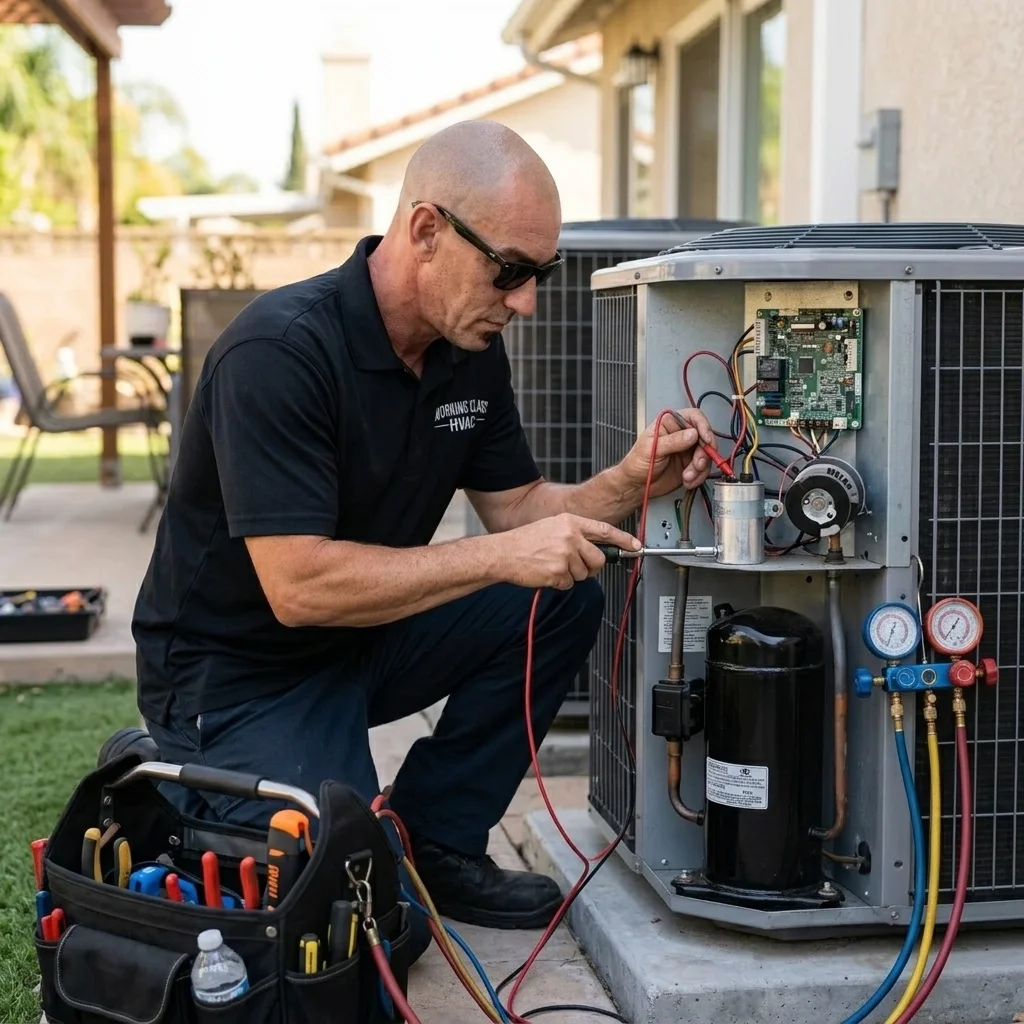
Even a well-installed system can develop problems over time. Refrigerant leaks, capacitor failures, blower motor issues, dirty coils, clogged drains, and thermostat malfunctions are all common causes of poor performance. When a system starts making unusual noises, blowing warm air, cycling too often, or producing weak airflow, prompt diagnosis can prevent a minor issue from turning into a major replacement expense.
One of the most valuable parts of professional repair is identifying the root cause instead of treating symptoms. For example, low airflow may not be a “bad AC” at all — it might be a collapsed return, a failing blower, or a dirty evaporator coil. In Lancaster, where many systems have been upgraded in stages over the years, mismatched components are another frequent source of trouble.
Common Signs Your System Needs Repair
- Warm air coming from vents during cooling mode
- Uneven temperatures between rooms or floors
- Ice on the indoor coil or refrigerant lines
- Water pooling around the indoor unit
- Grinding, rattling, or buzzing noises
- Higher utility bills without a change in usage
- Frequent cycling or failure to reach set temperature
Forensic Maintenance: The Smart Way to Protect Your System
Forensic maintenance goes beyond a basic tune-up. It is a detailed, evidence-based approach to identifying hidden wear, airflow problems, electrical stress, and performance decline before they cause breakdowns. This is especially valuable in Lancaster, where a system may be battling summer humidity, winter run time, dust from nearby roads, and the strain of older duct infrastructure all in the same year.
Forensic maintenance often includes temperature split testing, amp draw inspection, refrigerant performance checks, coil condition review, condensate flow analysis, and airflow verification. If a system is drifting out of spec, the signs are often visible long before a complete failure occurs. Catching those issues early can extend system life and preserve efficiency.
Why This Matters in Local Homes
Neighborhoods near the city center often feature older properties with additions, renovations, or converted spaces that were not originally designed for modern HVAC loads. Out toward Eastside Lancaster, Avenue J, or the edges of Quartz Hill, larger homes may have zoning or balancing concerns. Forensic maintenance helps identify these hidden issues before they turn into comfort complaints or emergency service calls.
Repair or Replace? How to Decide
| Situation | Repair May Make Sense | Replacement May Be Better |
|---|---|---|
| System age | Equipment under 10 years old with isolated failure | System near end of service life with repeated breakdowns |
| Comfort issues | One component causing a specific problem | Chronic uneven comfort throughout the home |
| Efficiency | Minor performance loss from maintenance issues | Major energy waste from outdated equipment |
| Repair frequency | First or second issue in a long period | Repeated service calls in recent seasons |
If your system is constantly struggling, replacement may ultimately save more money than repeated repairs. But if the core equipment is still structurally sound, a targeted repair paired with proper maintenance can deliver many more seasons of dependable comfort.
How Lancaster Climate Affects HVAC Performance
Local weather patterns influence almost every aspect of HVAC design and service. Lancaster’s humid summers increase latent cooling load, meaning the system must remove moisture as well as heat. Winters can bring prolonged cold periods that test heating capacity and duct sealing. Transitional seasons create frequent start-stop cycles, which can reveal thermostat issues, airflow imbalance, and refrigerant problems.
Homes near the Susquehanna River region may also deal with damp conditions and moisture control concerns, while properties farther inland can experience more pronounced heat buildup in upper floors and attic spaces. If your home is close to busy roads like US-30 or near commercial growth areas around Antelope Valley Mall Center, dust and airborne particulates may also increase filter and coil maintenance needs.
Efficiency, Comfort, and Long-Term Value
A well-designed central split HVAC system can lower monthly energy use, reduce temperature swings, and improve indoor air quality. High-efficiency systems can also run more quietly and maintain better humidity control, which makes a noticeable difference during scorching Antelope Valley summers. But efficiency only pays off when the system is installed and maintained correctly.
Working Class HVAC helps homeowners understand the full value of the system, not just the sticker price. The right unit should fit the home’s needs, allow for manageable service access, and deliver reliable performance over time. That means selecting equipment with the right capacity, ensuring the ductwork can support it, and keeping the system clean and calibrated.
What Homeowners Should Expect From a Professional Service Visit
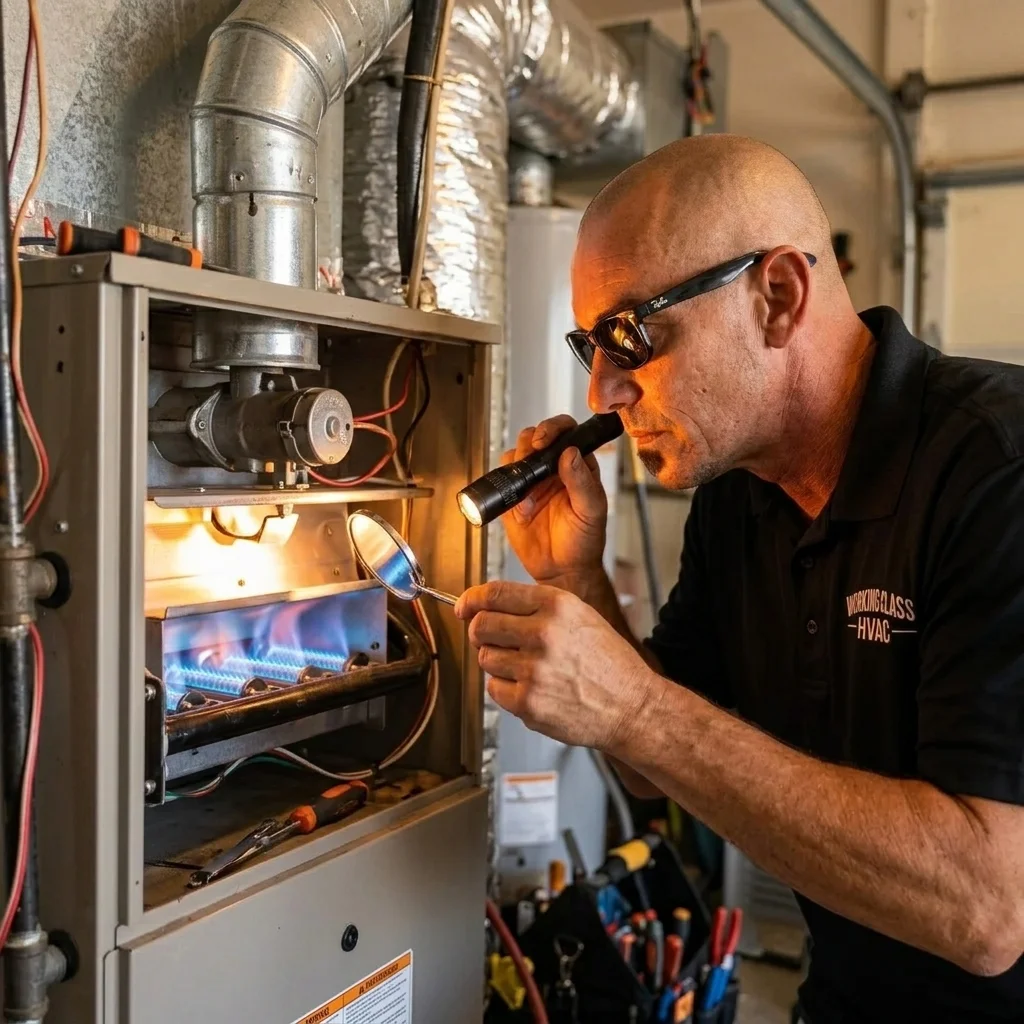
A professional visit should feel organized, transparent, and technically thorough. You should receive clear explanations of what was found, what needs attention, and what can wait. The goal is not to overwhelm you with jargon, but to give you practical information that supports the right decision for your home and budget.
Good Service Includes
- Detailed system diagnostics
- Honest explanation of repair options
- Clear discussion of replacement thresholds
- Respect for your property and schedule
- Recommendations based on long-term performance
Frequently Asked Questions
How long does a central split HVAC system last?
With proper installation and regular maintenance, many systems last 12 to 18 years or longer. Lifespan depends on usage, equipment quality, and how hard the system has to work during Lancaster’s hot summers and cold winters.
Why is my system running but not cooling well?
This can be caused by dirty coils, low refrigerant, duct leaks, blower issues, or thermostat problems. A full diagnostic is the best way to pinpoint the cause.
Can older Lancaster homes use central split systems effectively?
Yes, but older homes often need duct evaluation, airflow balancing, and potentially insulation improvements to achieve strong results.
Is a heat pump considered a split system?
Yes. A split heat pump uses indoor and outdoor components just like a standard split air conditioning system, but it can provide both heating and cooling.
How often should maintenance be done?
At least once per year, and ideally twice yearly for systems that handle both heating and cooling. In Lancaster’s climate, seasonal service helps keep the system efficient and reliable.
Choose Working Class HVAC for Central Split HVAC Systems in Lancaster
When you want central split HVAC installation or repair done with precision, local knowledge, and a focus on lasting value, Working Class HVAC is ready to help. We understand the realities of Lancaster homes, from historic borough properties to newer suburban builds, and we bring a practical approach to every job. If your system needs expert installation, a difficult repair, or detailed maintenance that gets to the root of the problem, our team is here to deliver solutions built around your home, your comfort, and your long-term peace of mind.